 Build A Center
 Modernization & Upgrade
 Gobal Distributor
 About Us
 Technology
 Project
 Blog
Blog Product Brochure
Understanding Bowling Lane Zones: Why Every Bowling Lane Is Divided into Three Sections
From the Approach to the Pin Deck—Discover Why Every Part of a Bowling Lane Has a Purpose
To most bowlers, a bowling lane looks like one long, polished surface.
But behind that seamless appearance lies a carefully engineered design.
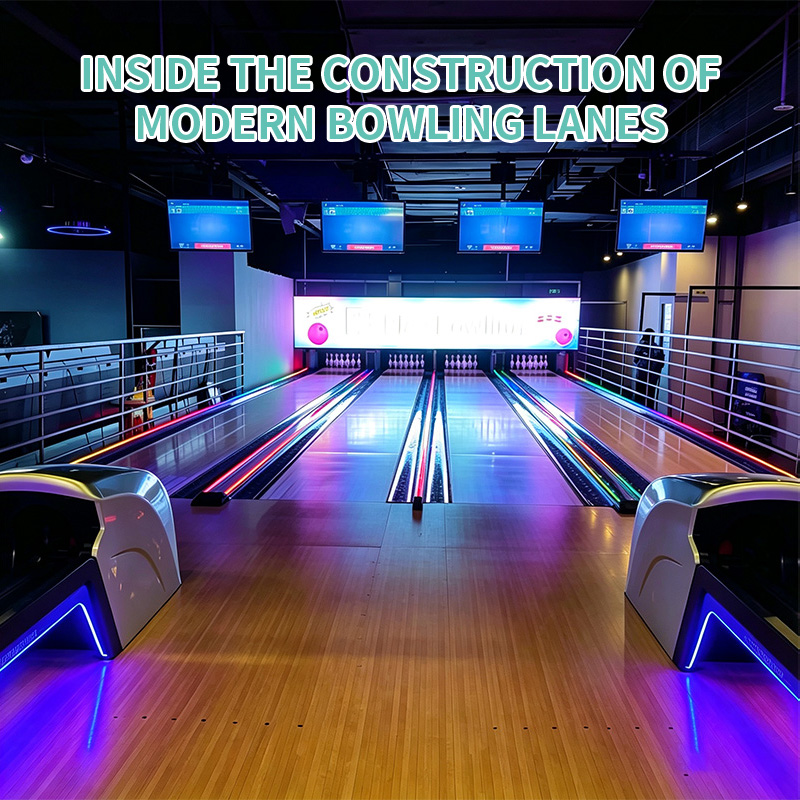
Every modern bowling lane is divided into three functional zones, each built to withstand different types of impact, movement, and wear. From the moment a player takes the first step to the instant the pins crash down, every section of the lane serves a unique purpose.
If you've ever wondered why bowling lanes are designed this way—or what those mysterious dots and arrows on the lane actually mean—this guide has the answers.
The Three Main Bowling Lane Zones
A standard bowling lane consists of three primary functional zones:
l Approach
l Lane Playing Area
l Pin Deck
Although modern bowling lanes appear to be one continuous surface, each zone is designed for a different purpose and engineered to withstand different types of impact and wear.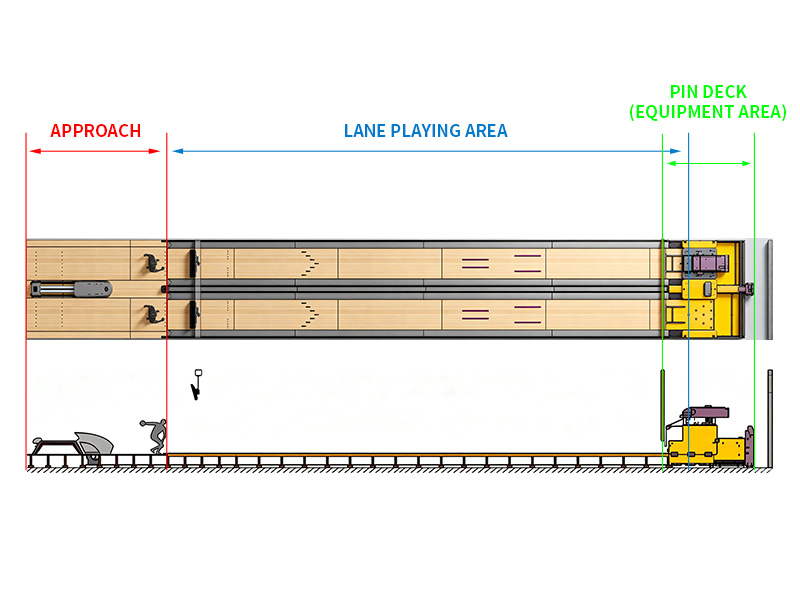
1. The Approach – Where Every Shot Begins
Before releasing the bowling ball, players take several controlled steps on the approach.
This area must provide enough grip for safe footwork while still allowing bowlers to slide naturally during the final step.
Historically, approaches were constructed from hard maple, a durable hardwood capable of handling thousands of footsteps every day.
Today, most commercial bowling centers use high-performance synthetic panels that reproduce the feel of traditional wood while offering greater durability, moisture resistance, and lower maintenance.
A smooth, consistent approach helps players develop accurate timing and balance before every throw.
2. The Bowling Playing Area – Where the Ball Meets the Lane
The Playing Area is the section where the bowling ball lands after release and rolls toward the pins.
Immediately after crossing the foul line, the bowling ball lands in the playing area.
This area experiences repeated impacts from bowling balls and plays a crucial role in determining ball speed, hook potential, and overall consistency.
To withstand continuous commercial use, modern bowling centers typically use high-pressure synthetic lane panels with excellent wear resistance, scratch resistance, and dimensional stability. Compared with traditional wooden lanes, synthetic panels require less maintenance while delivering more consistent playing conditions.
3. The Pin Deck – Where Every Strike Is Decided
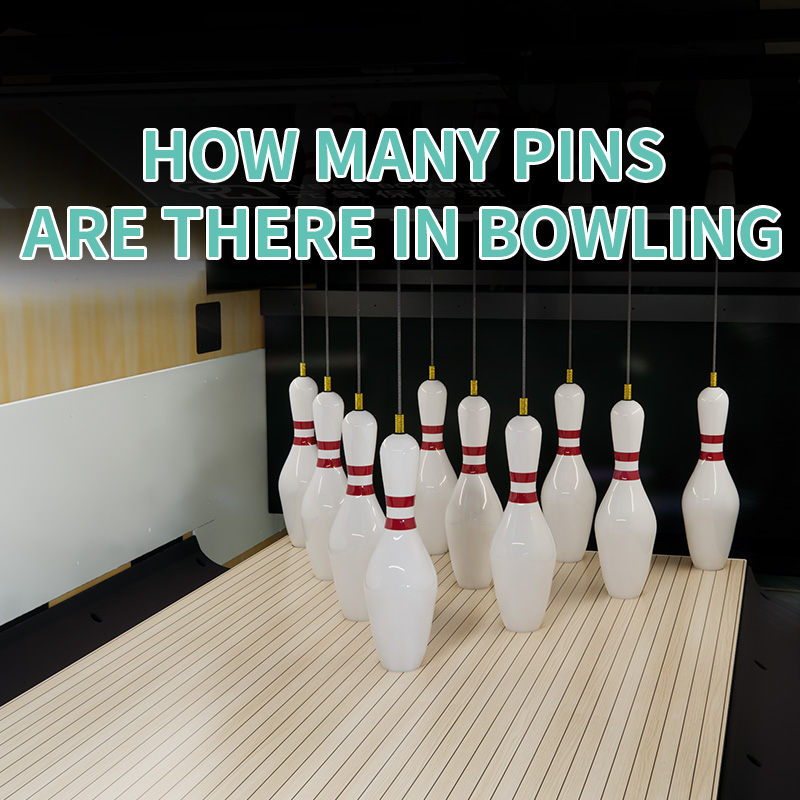
At the end of the lane is the pin deck, where the bowling pins are positioned and reset after every frame.
This section experiences the highest level of impact as bowling balls and pins collide repeatedly throughout the day.
Like the lane surface, modern pin decks are typically constructed using durable synthetic materials engineered to withstand continuous heavy use while maintaining precise pin positioning.
Its strength directly affects pin action, equipment reliability, and long-term durability.
Why Is the Bowling Lane Divided into Three Zones?
If modern bowling lanes use the same synthetic material throughout, why not simply build one continuous surface?
The answer is simple: each zone performs a completely different job.
Separating the lane into functional sections provides several important advantages.
Optimized Player Performance
The approach is designed for controlled foot movement, while the lane surface is engineered specifically for smooth and predictable ball motion.
Each area is optimized for the activity taking place there.
Improved Durability
Different parts of a bowling lane experience different types of wear.
The approach must withstand constant foot traffic, the lane surface endures rolling bowling balls, and the pin deck absorbs repeated high-impact collisions.
Designing each area for its specific workload extends the lifespan of the entire bowling lane system.
Easier Maintenance and Replacement
Dividing the lane into sections also simplifies maintenance.
If one area becomes damaged or worn, technicians can repair or replace the affected section without rebuilding the entire lane.
This reduces downtime and long-term operating costs for bowling center owners.
What Do the Dots and Arrows on a Bowling Lane Mean?
One of the most common questions from beginner bowlers is:
"Are those dots and arrows just decorations?"
Not at all.
These markings are precision aiming guides designed to help players improve consistency.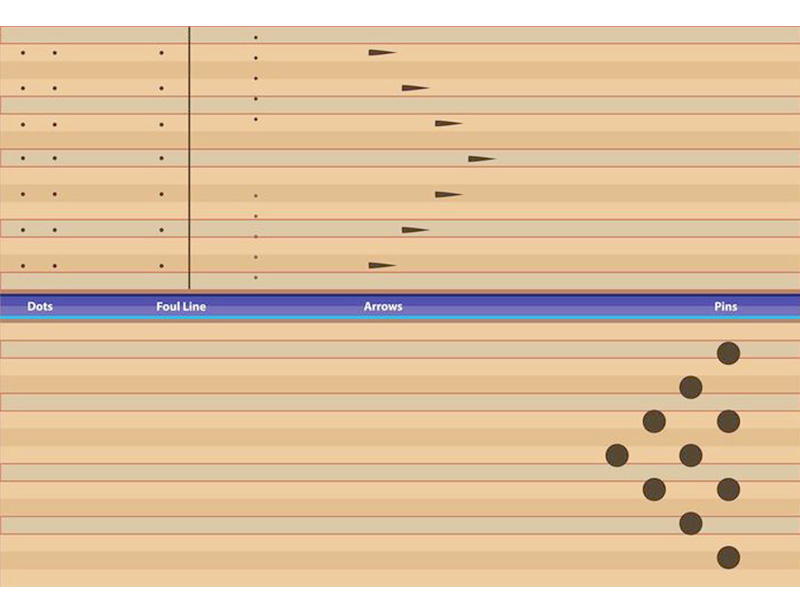
The Approach Dots
Small dots located on the approach serve as foot placement references.
They help bowlers develop a repeatable starting position before every shot.
Many experienced players use these markers to ensure their approach remains consistent from frame to frame.
The Target Arrows
About 15 feet (approximately 4.6 meters) beyond the foul line, you'll find a row of arrows embedded in the lane.
Rather than looking directly at the pins, many bowlers focus on these arrows.
Why?
Because aiming at a closer target is much easier than aiming at pins nearly 60 feet away.
Professional bowlers often use the arrows to control ball trajectory and create more consistent shots.
Range Finder Dots
Additional dots located farther down the lane provide visual references that help experienced players judge ball path and hook reaction.
Combined with the arrows, these lane markings allow bowlers to make subtle adjustments based on lane conditions and oil patterns.
Although most recreational players don't consciously use every marker, competitive bowlers rely on them throughout every game.
Fun Fact: Professional Bowlers Rarely Aim at the Pins
It might sound surprising, but many professional bowlers hardly look at the pins during their release.
Instead, they focus on a specific arrow or board on the lane, allowing the bowling ball to follow a carefully planned path toward the pocket.
In other words, the arrows—not the pins—are often the real target.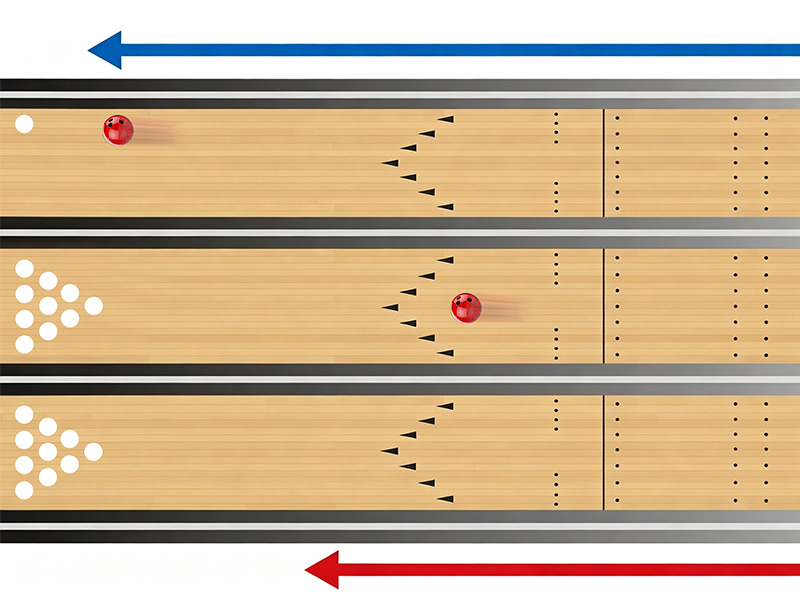
Precision Built for Every Roll
A bowling lane is far more than a polished floor.
From the approach and lane surface to the pin deck, every section is engineered to support player performance, improve durability, and deliver a consistent bowling experience.
At SunEye, our bowling lane systems are designed with high-performance synthetic lane panels, precision manufacturing, and professional engineering to ensure reliable operation for modern bowling centers worldwide. Whether you're building a traditional bowling alley, a family entertainment center, or a boutique venue, every lane is built with performance, durability, and long-term value in mind.
FAQ
-
Understanding Bowling Lane Zones
Most experienced bowlers aim at the arrows on the lane because they provide a closer, more accurate reference point, making it easier to control ball direction and consistency.
-
Are all three bowling lane zones made from different materials?
Traditional wooden lanes often used different hardwoods, such as hard maple and pine, for different sections. Modern bowling lanes typically use advanced synthetic laminate panels throughout the lane system, offering greater durability, precision, and lower maintenance while preserving the performance characteristics required for each zone.