
 Build A Center
 Modernization & Upgrade
 Gobal Distributor
 About Us
 Technology
 Project
 Blog
Blog Product Brochure
String Pinsetter
String Pinsetter technology simplifies the traditional pinsetting structure by replacing complex mechanical mechanisms with a string-controlled system. SunEye develops and manufactures
string pinsetter solutions designed for reliable operation, lower maintenance, efficient performance, and flexible installation across modern bowling venues.


What Is a String Pinsetter?
A Simpler Approach to Automatic Pinsetting
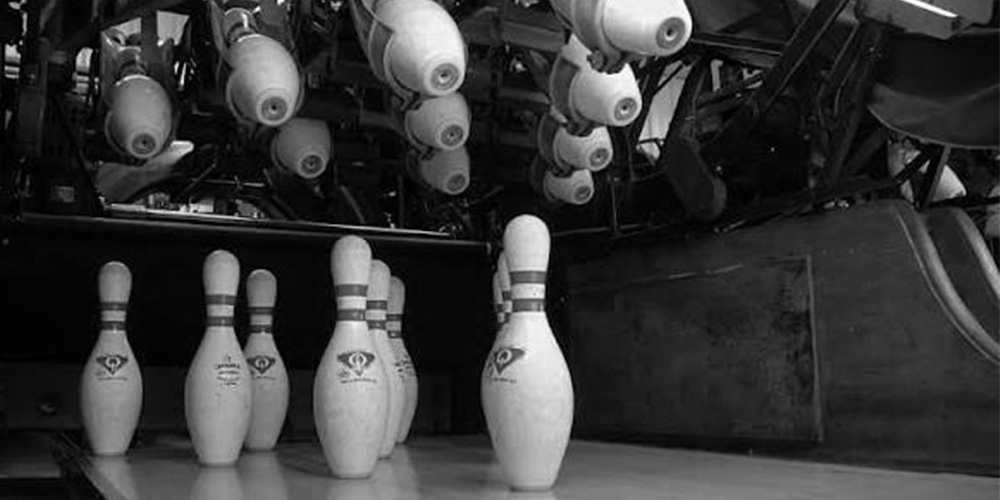
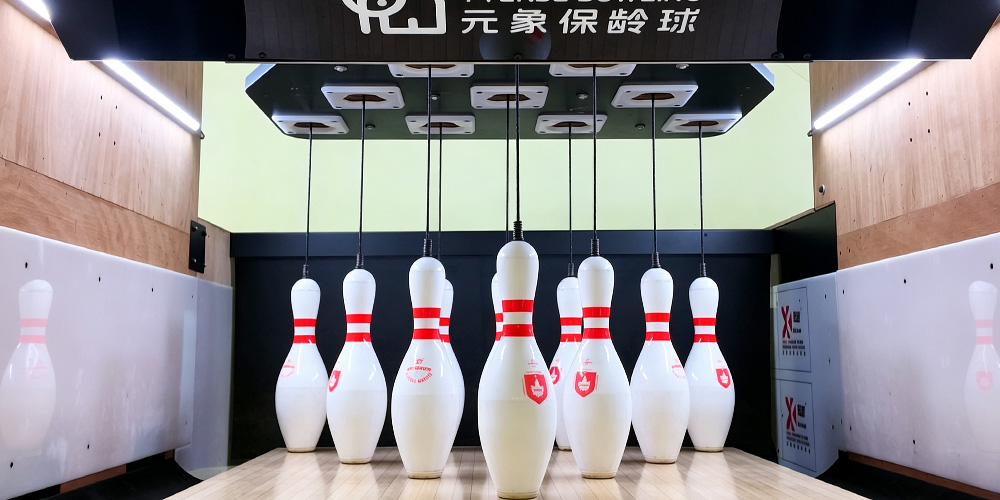
String Pinsetter is an automatic bowling pinsetting system that uses strings connected to bowling pins to control their movement, positioning, and resetting. Compared with traditional mechanical pinsetters,
string pinsetters use a simplified structure with fewer complex moving components. This can help reduce mechanical wear, maintenance requirements, equipment footprint, and operating complexity.
For modern bowling centers, string pinsetter technology provides an alternative approach to automatic pinsetting while supporting reliable and efficient commercial operation.
How Does a String Pinsetter Work?
A simplified pinsetting process means fewer mechanical components and greater operational flexibility.
01 — Ball Impact
The bowling ball hits the pins and the pins fall according to the impact.

02 — Pin Detection
The system identifies the pin positions and determines the required reset action.

03 — String Control
Individual strings connected to the pins control their movement and positioning.
04 — Automatic Reset
The pins are returned to the correct positions, preparing the lane for the next frame.
Why Are Bowling Centers Choosing String Pinsetters?
Simplified mechanical architecture delivers reliable operation, easier maintenance, flexible installation, and improved efficiency.
 01
01
Fewer Components.
Fewer Failure Points.
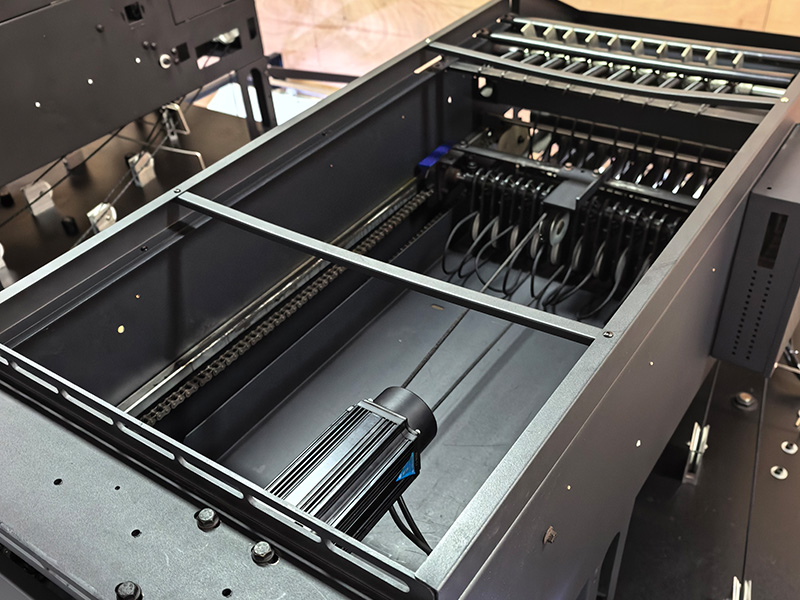
SunEye String Pinsetter uses an innovative string-controlled architecture instead of complex mechanical arm assemblies. The simplified mechanical design reduces core components by up to 60%, helping reduce potential mechanical failure points from the equipment structure itself.
Up to 60% fewer core components*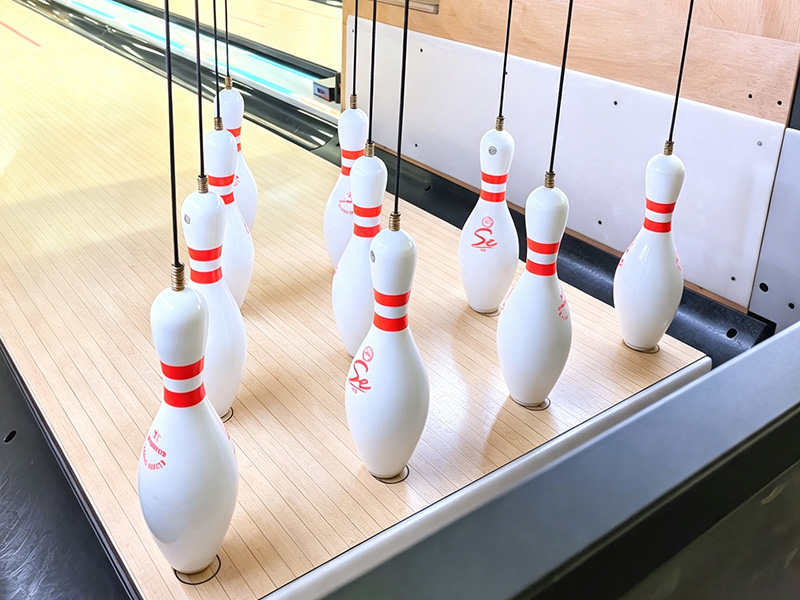 02
02
Less Maintenance.
Less Manual Intervention.
With fewer mechanical assemblies involved in the pinsetting cycle, routine inspection and maintenance can be simplified. The intelligent control system can automatically identify and recover from up to 99% of common equipment abnormalities, reducing the need for frequent manual intervention.*
Intelligent fault detection & automatic recovery*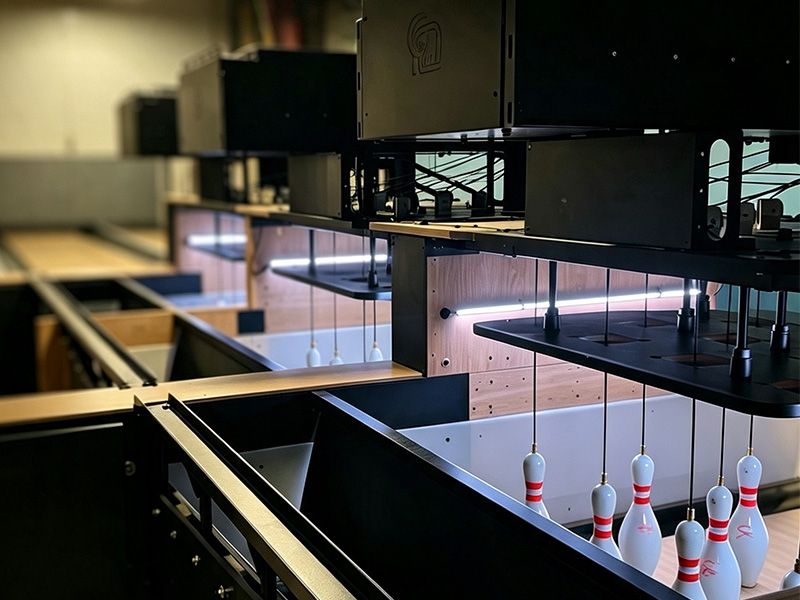 03
03
Lower Noise.
Lower Energy Consumption.
The simplified mechanical structure reduces unnecessary mechanical movement, supporting quieter operation and lower energy consumption. This helps create a more comfortable environment for bowlers while reducing operating costs for venue owners.
Designed for efficient commercial operation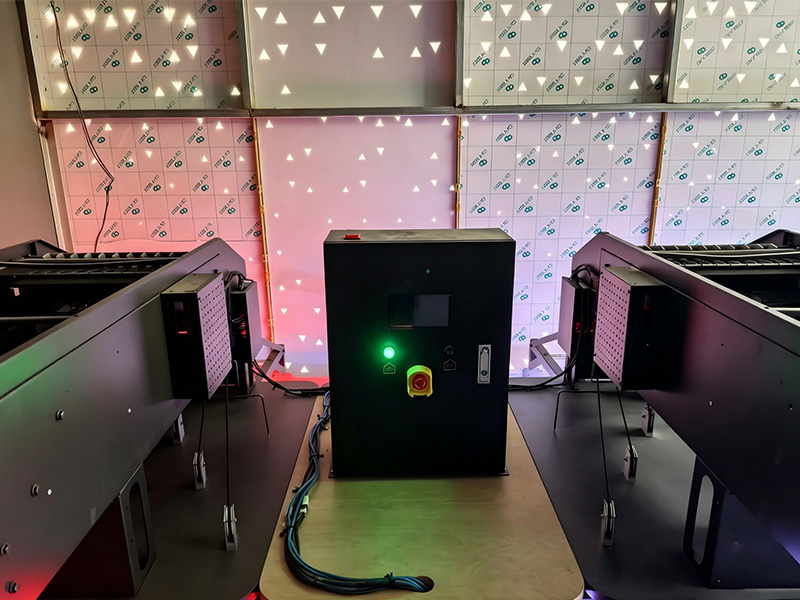 04
04
Fast Reset.
Precise Pin Positioning.
SunEye String Pinsetter completes a full pin reset in ≤8 seconds, with pin positioning accuracy of ≤2 mm*. The system is engineered for stable high-frequency commercial operation and supports continuous 7×24-hour running under specified operating conditions.
≤10s reset time · ≤2mm positioning accuracy*String Pinsetter vs Free-Fall Pinsetter
Two different engineering approaches to bowling pinsetting. Compare their mechanical architecture, pin control method, maintenance requirements, installation flexibility, and operating performance.
| Technical Feature | String Pinsetter String-Controlled System | Free-Fall Pinsetter Mechanical Handling System |
|---|---|---|
| Pin Control Method | Each pin is connected to an individual string for lifting, positioning, and resetting. | Pins are physically transported through mechanical handling assemblies before being reset. |
| Pinsetting Mechanism | String-controlled vertical movement combined with electronic positioning control. | Mechanical arms, conveyors, elevators, distributors, and related assemblies work together to reset pins. |
| Mechanical Architecture | Simplified structure with fewer moving mechanical components. | Multi-stage mechanical architecture with multiple moving assemblies. |
| Pin Detection & Control | Electronic control coordinates string movement, pin positioning, and reset sequences. | Mechanical handling sequence combined with electrical control and sensor systems. |
| Moving Components | Relatively fewer mechanical moving parts. | More mechanical assemblies and moving components. |
| Mechanical Wear | Reduced mechanical contact and fewer potential mechanical wear points. | More mechanical contact points requiring regular inspection and maintenance. |
| Maintenance | Maintenance mainly focuses on strings, motors, sensors, control components, and related mechanisms. | Maintenance may involve mechanical handling, transport, lifting, positioning, and drive assemblies. |
| Potential Failure Points | Simplified architecture can reduce the number of potential mechanical failure points. | More mechanical assemblies create additional potential failure points. |
| Equipment Footprint | Compact structure with flexible equipment arrangement behind the lanes. | More mechanical equipment is generally required behind the pin deck. |
| Installation Requirements | Lower structural complexity and flexible installation requirements. | More mechanical assemblies require careful installation and alignment. |
| Pin Positioning Accuracy | ≤ 2 mm* | System dependent |
| Complete Reset Time | ≤ 8 seconds* | System and machine configuration dependent |
| Operating Noise | Low-noise operation with simplified mechanical movement. | More mechanical movement can generate comparatively higher operating noise. |
| Energy Consumption | Designed for lower energy consumption through simplified mechanical architecture. | Multiple mechanical assemblies can result in higher operating power requirements. |
| Application | New bowling centers and modernization projects. | Conventional full-size bowling installations. |
| Upgrade Flexibility | Compact architecture provides greater flexibility for bowling center modernization. | Existing mechanical infrastructure may require more extensive modification during upgrades. |
Different Engineering Approaches
Free-Fall Pinsetter
A free-fall pinsetter relies on a sequence of mechanical operations to collect, transport, sort, and reset bowling pins. Multiple mechanical assemblies must work together in a coordinated cycle.
String Pinsetter
A string pinsetter uses individual strings attached to the bowling pins. The control system manages the vertical movement and positioning of each pin, reducing the need for complex mechanical transportation and redistribution mechanisms.
* SunEye performance figures are based on specified operating conditions and internal testing.
Inside SunEye String Pinsetter Technology
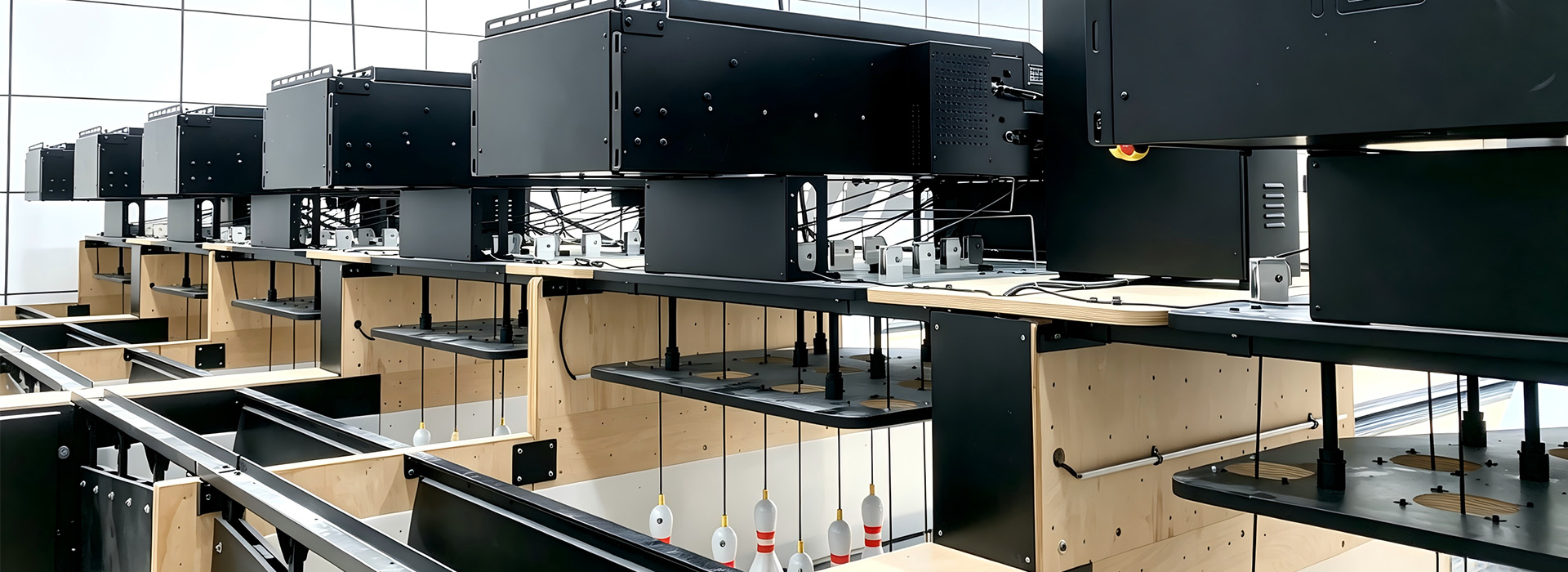
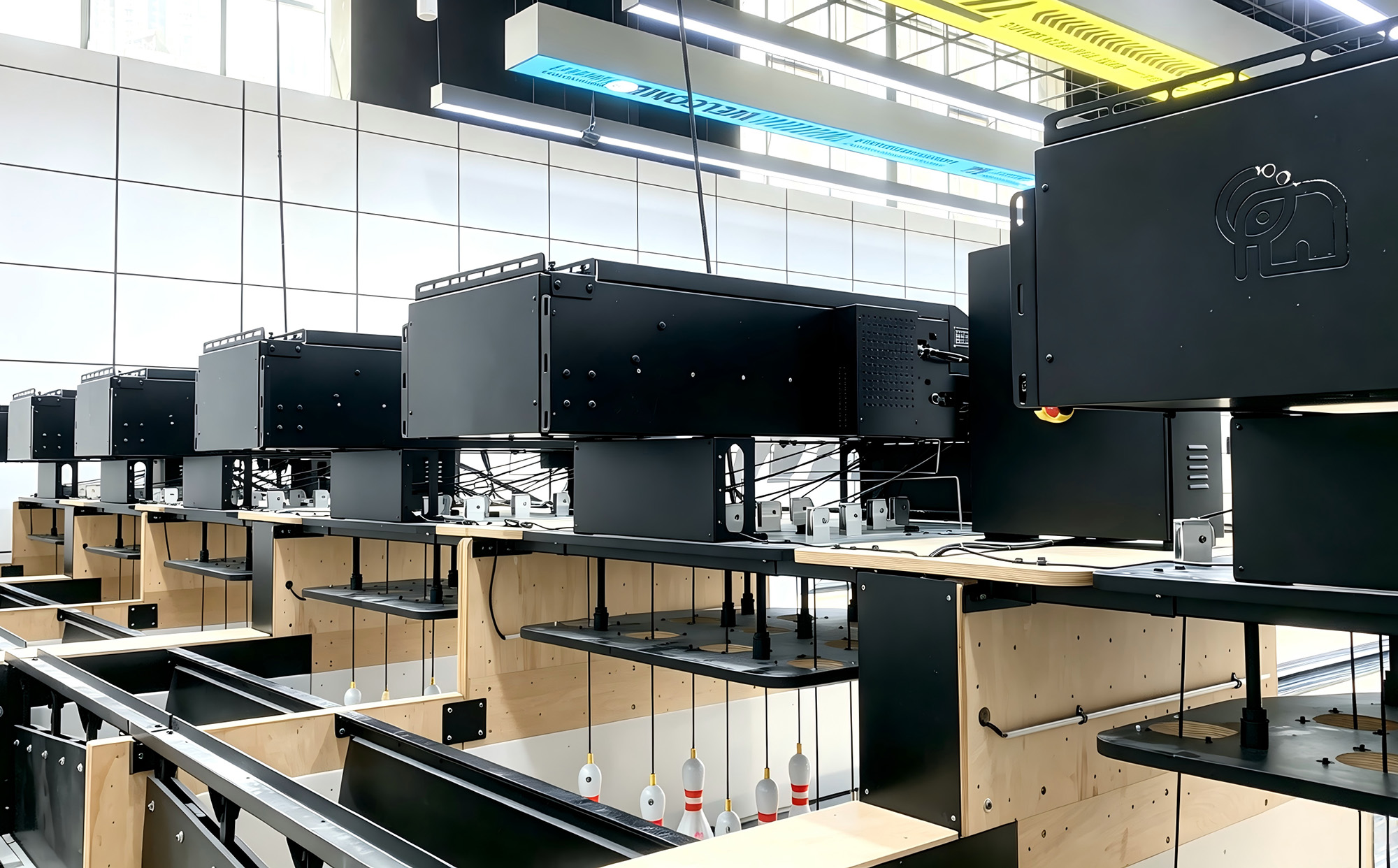

Suspended String Architecture
Flexible string transmission replaces complex mechanical arm structures.

Intelligent Control System
Real-time monitoring and automatic fault recognition help simplify equipment management.

Precision Pin Positioning
Designed for accurate and consistent pin placement.

Integrated Safety & Protection
Designed to support stable operation during high-frequency commercial use.

Lightweight Mechanical Structure
Compact components help simplify installation and venue planning.
Built for Different Bowling Formats
-

Standard Bowling
Designed for full-size commercial bowling projects and high-frequency bowling operations. -
Duckpin Bowling
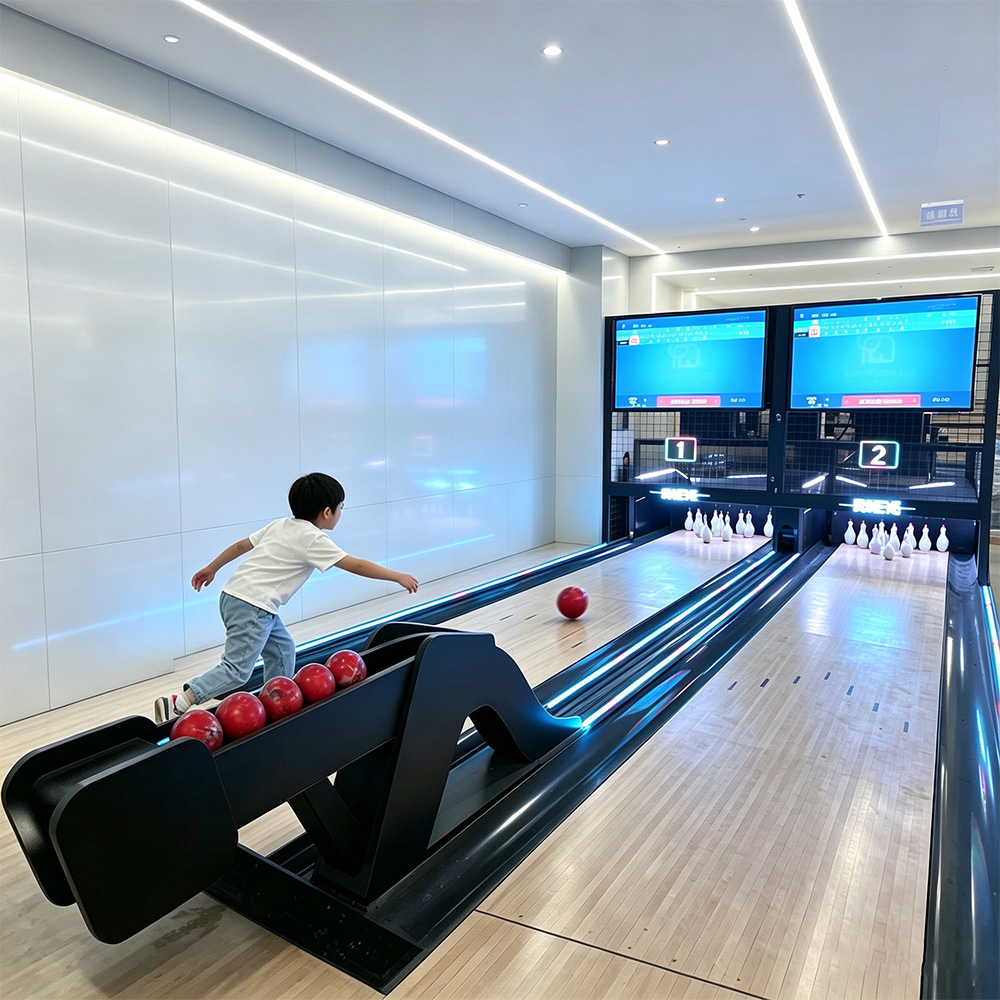
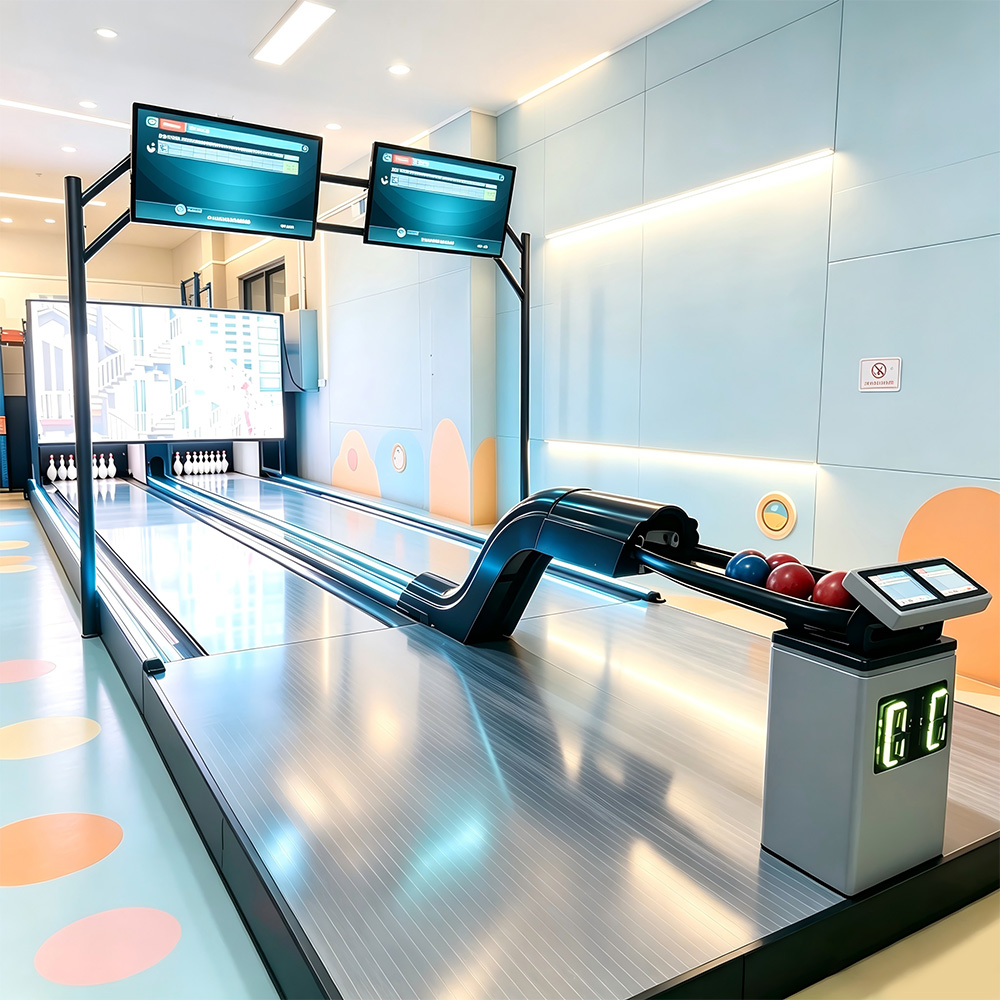
Suitable for bars, restaurants, clubs, FECs and other compact entertainment spaces. -
Mini Bowling
Designed for children, families, birthday parties and family entertainment centers.
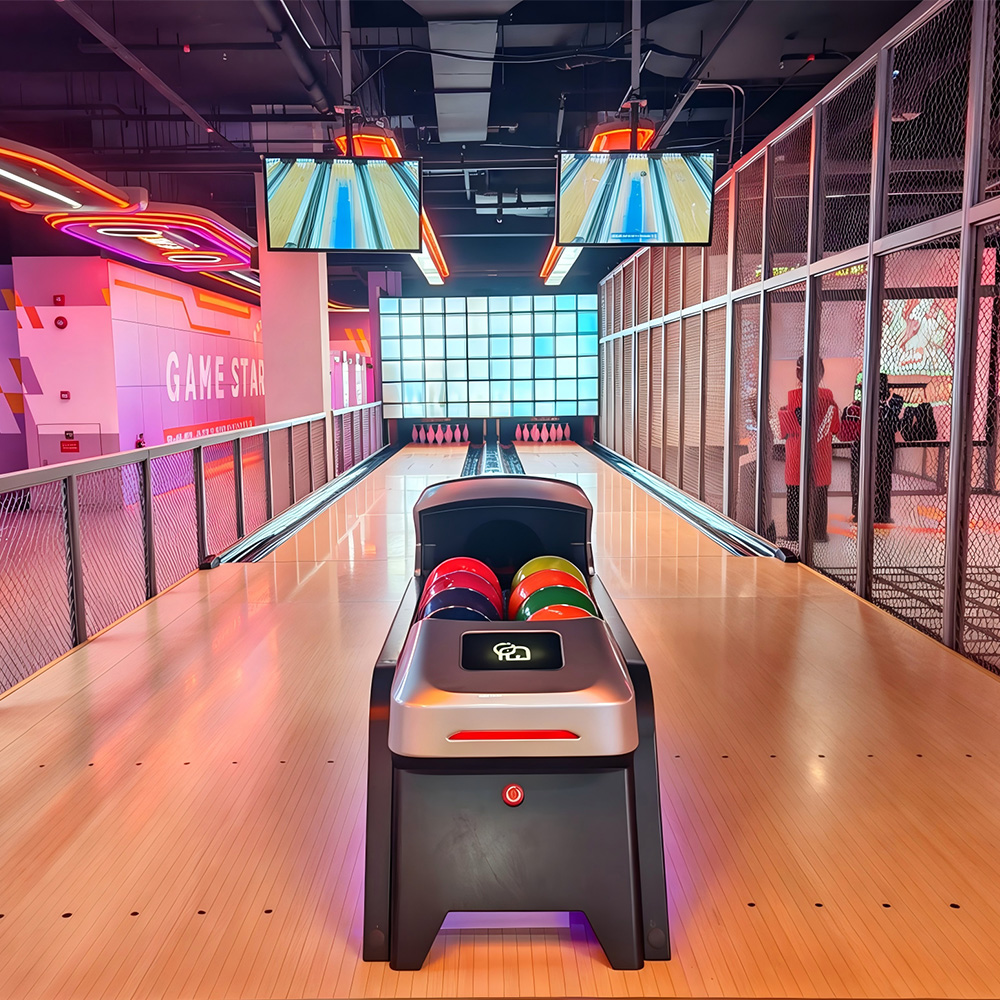
String Pinsetter for New Centers & Existing Upgrades
Flexible string pinsetter solutions for new bowling centers and existing bowling center modernization projects.
String Pinsetter for
New Bowling Centers
Designed for new bowling projects, SunEye String Pinsetter can be integrated into the venue design from the beginning. Its compact structure provides greater flexibility for lane layout, equipment planning, machine room design, and overall space utilization.
String Pinsetter for
Existing Bowling Center Upgrades
For existing bowling centers, SunEye String Pinsetter can be introduced as part of an equipment modernization project. The upgrade plan is developed according to the existing lane structure, equipment condition, and venue requirements.
String Pinsetter FAQ
-
What is a string pinsetter?
A string pinsetter is an automatic bowling pinsetting system that uses strings attached to the pins to control their movement and reset them after each frame.
-
How does a string pinsetter work?
The system uses individual strings to control bowling pins, allowing the pins to be lifted, positioned, and reset automatically.
-
Are string pinsetters reliable?
String pinsetters use a simplified mechanical structure with fewer moving components, which can help reduce mechanical wear and maintenance requirements.
-
How long does a string pinsetter take to reset pins?
SunEye String Pinsetter is designed to complete a full pin reset within 8 seconds or less under specified operating conditions.
-
What bowling systems use string pinsetters?
String pinsetters can be used with Standard Bowling, Duckpin Bowling, and Mini Bowling systems.
-
Are string pinsetters suitable for bowling center upgrades?
Yes. String pinsetter technology can be used as part of bowling center modernization projects, subject to compatibility assessment of the existing lanes and equipment.
-
What is the difference between a string pinsetter and a traditional pinsetter?
The main difference is the pinsetting mechanism. Traditional systems rely on more complex mechanical structures, while string pinsetters use strings connected to the bowling pins.