
 Build A Center
 Modernization & Upgrade
 Gobal Distributor
 About Us
 Technology
 Project
 Blog
Blog Product Brochure
The Evolution of Bowling: From Ancient Origins to Modern Smart Bowling Systems
Bowling is one of the world's oldest and most beloved recreational sports. What began as a simple game thousands of years ago has evolved into a global entertainment industry supported by advanced technology, automated equipment, and immersive customer experiences. Today, modern bowling centers are no longer just sports venues—they are social entertainment destinations powered by intelligent bowling systems.
In this article, we'll explore the history of bowling and how technological innovation has transformed the industry, leading to the development of modern bowling solutions offered by SunEye.
The Fascinating History of Bowling: From Ancient Tombs to Smart Bowling Centers
When people walk into a modern bowling center today, they are often greeted by colorful LED lighting, automatic scoring systems, interactive competitions, and intelligent pinsetters. Few realize that the game they are about to play has a history stretching back thousands of years.
The story of bowling is not just the history of a sport—it is a story of human entertainment, technological innovation, and social connection.
Did Bowling Really Begin 5,000 Years Ago?
Believe it or not, the origins of bowling may date back to ancient Egypt around 3200 BC.
Archaeologists discovered stone objects resembling bowling balls and pins inside children's tombs. While historians cannot say with complete certainty that these were used exactly like modern bowling equipment, the discovery suggests that people were already playing games involving rolling objects toward targets over 5,000 years ago.
Imagine ancient Egyptians enjoying a primitive version of bowling while the pyramids were still being built.
Medieval Europe: Bowling as a Test of Skill
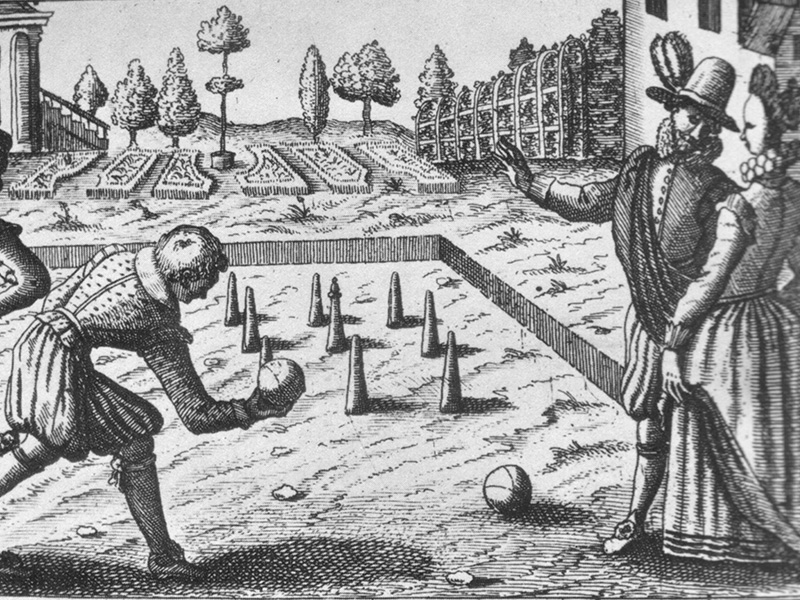
As civilizations developed, bowling-like games spread throughout Europe.
In Germany during the Middle Ages, people participated in a game called Kegel, where players attempted to knock down a wooden club known as a "Kegel." Interestingly, the game was sometimes associated with religious ceremonies, and successfully knocking down the target symbolized overcoming personal flaws or sins.
Across England and the Netherlands, various forms of lawn bowling and pin games became popular among both common citizens and royalty.
One famous enthusiast was King Henry VIII of England, who reportedly enjoyed bowling so much that he had private lanes built for his personal use.
Bowling Crosses the Atlantic
When Dutch settlers arrived in North America during the 17th century, they brought their favorite bowling games with them.
Early versions often featured nine pins arranged in a diamond shape.
However, nine-pin bowling became associated with gambling, leading some regions in the United States to ban the game.
Players responded with a simple but ingenious solution:
They added a tenth pin.
This small change created the foundation of what would later become modern ten-pin bowling, the most popular bowling format in the world today.
The Birth of Modern Bowling
By the late 1800s, bowling had evolved from a casual pastime into an organized sport.
In 1895, bowling leaders established a national governing organization in the United States, which later evolved into the United States Bowling Congress (USBC). Standardized rules were introduced, including:
l Official lane dimensions
l Pin placement specifications
l Ball size regulations
l Uniform scoring systems
For the first time, bowlers could compete under the same rules regardless of location.
This standardization helped transform bowling from local entertainment into a global sport.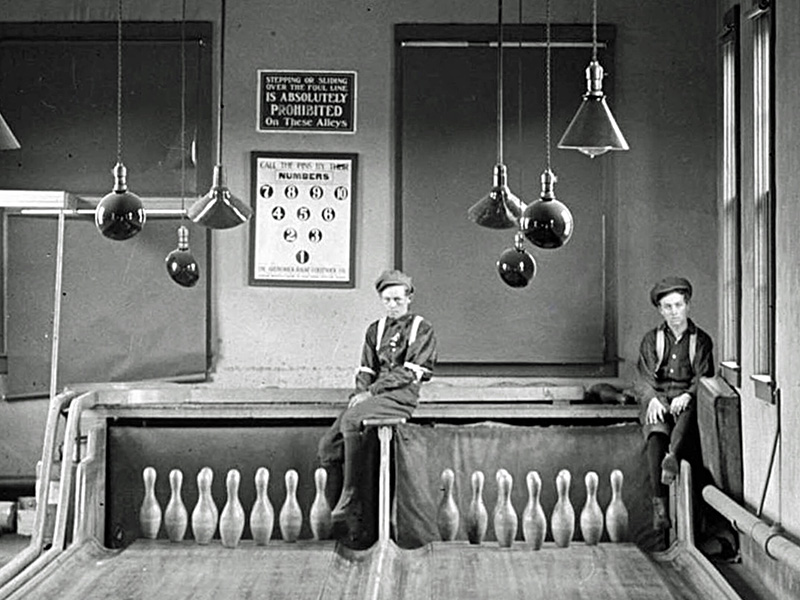
The Era Before Automation
Modern bowlers often take automatic pinsetters for granted.
However, for much of bowling history, there was no automation at all.
After every frame:
l Pins had to be manually reset.
l Bowling balls had to be returned by hand.
l Scores had to be calculated manually.
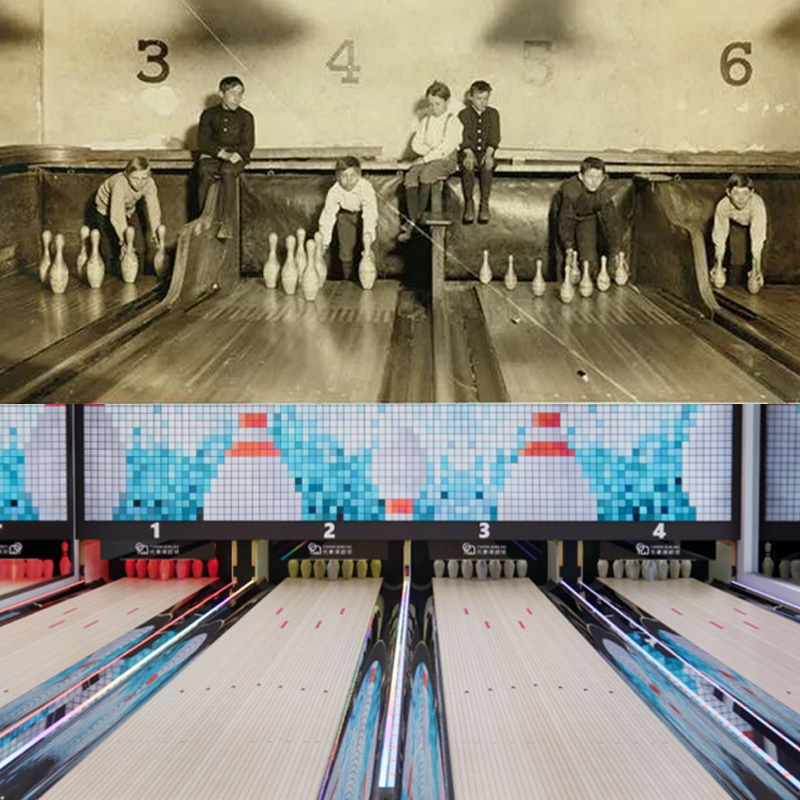
Many bowling centers employed young workers known as "pin boys", whose job was to stand behind the lanes and reset pins after every roll.
The work was repetitive, physically demanding, and sometimes dangerous.
As bowling centers grew larger, operators desperately needed a more efficient solution.
The Revolution of Automatic Pinsetters
The 1950s brought one of the most important innovations in bowling history—the automatic pinsetter.
Instead of relying on pin boys, machines could now:
l Detect fallen pins
l Clear the deck
l Reset standing pins
l Place a full rack automatically
This breakthrough dramatically reduced labor costs and allowed bowling centers to expand rapidly across North America and beyond.
For many industry experts, the automatic pinsetter was the invention that transformed bowling into a modern commercial entertainment business.
Bowling Enters the Digital Age
The next major transformation came with computers and digital technology.
Bowling centers gradually introduced:
Electronic Scoring Systems
No more manual calculations.
Scores could now be displayed automatically and accurately in real time.
HD Score Displays
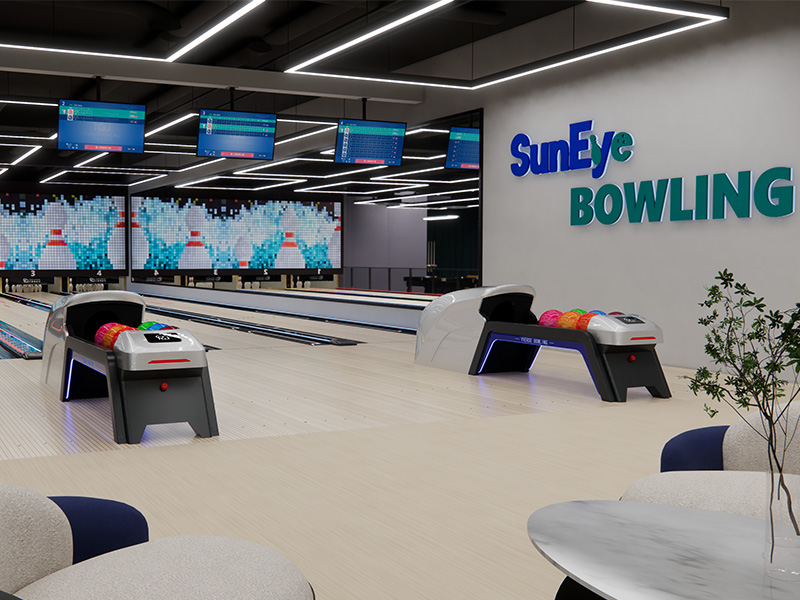
Modern scoring monitors added animations, player statistics, and interactive graphics.
Online Competitions
Players could compete against friends, leagues, and even participants from other cities or countries.
Smart Venue Management
Operators gained powerful tools for:
l Lane reservations
l Membership management
l Tournament organization
l Revenue tracking
Bowling became more connected, interactive, and entertaining than ever before.
From Mechanical Machines to Smart Bowling: The SunEye Journey
Just as bowling has evolved over centuries, bowling equipment has also undergone remarkable transformation.
SunEye represents a new generation of bowling technology focused on efficiency, reliability, and intelligent operation.
Building upon decades of industry development, SunEye has contributed to the industry's evolution through innovations in:
l String pinsetter technology
l Intelligent scoring systems
l Real-time online competitions
l Standard bowling solutions
l Duckpin bowling equipment
l Mini bowling systems
l Energy-efficient operation
Today, bowling centers are no longer limited to traditional sports venues. They have become social entertainment destinations where technology enhances every aspect of the player experience.
From ancient Egyptian stone balls to modern smart bowling systems, the journey of bowling continues—and SunEye is proud to be part of the next chapter.
The Evolution of SunEye Bowling Equipment
As the bowling industry continued to evolve, SunEye focused on developing innovative and cost-effective bowling solutions for the global market.
2015–2019: Technology Foundation
During its early development stage, SunEye concentrated on technology research, engineering support, and equipment innovation. Through extensive R&D and industry experience, the company built a strong foundation in bowling system design and manufacturing.
2020–2022: Product Innovation and Global Expansion
SunEye achieved major breakthroughs in:
l Bowling software systems
l Intelligent control technology
l New material applications
l Energy-efficient equipment design
During this period, SunEye expanded into international markets and delivered bowling equipment solutions to customers across multiple regions worldwide.
2023–Present: Smart Bowling and Global Growth
Today, SunEye provides a complete range of bowling solutions, including:
l Standard Bowling Equipment
l Duckpin Bowling Equipment
l Mini Bowling Equipment
l String Pinsetter Systems
l Intelligent Scoring Systems
l Ball Return Systems
l LED Lane Lighting
l Bowling Center Turnkey Solutions
With successful projects across numerous countries and regions, SunEye continues to help operators build modern bowling venues that combine professional performance, operational efficiency, and customer engagement.
The Future of Bowling
The future of bowling extends beyond traditional gameplay.
Industry trends increasingly focus on:
l Smart venue management
l Online tournaments and rankings
l Interactive customer experiences
l Energy-efficient equipment
l Compact entertainment concepts
l Family-friendly attractions
l Integrated food, beverage, and social entertainment
Bowling is evolving from a sport into a complete entertainment ecosystem.
As technology continues to advance, companies like SunEye are helping shape the next generation of bowling experiences through innovation, automation, and intelligent venue solutions.
Conclusion
From ancient Egyptian games to modern smart bowling centers, the history of bowling is a story of continuous innovation. Each technological advancement—from automatic pinsetters to intelligent scoring systems—has transformed how people play and how operators run their businesses.
Today, SunEye continues this tradition of innovation by providing modern bowling equipment and turnkey solutions that help customers build efficient, engaging, and future-ready bowling centers around the world.
Interested in building a new bowling center or upgrading your existing facility? Contact SunEye to discover customized bowling solutions tailored to your project needs.