
 Build A Center
 Modernization & Upgrade
 Gobal Distributor
 About Us
 Technology
 Project
 Blog
Blog Product Brochure
How to Maintain a Bowling Lane: The Complete Guide to Bowling Lane Care & Maintenance
A Well-Maintained Bowling Lane Lasts Longer—and Plays Better
A bowling lane is one of the most valuable investments in any bowling center. Whether you're operating a family entertainment venue, a commercial bowling alley, or a competitive training facility, proper lane maintenance is essential for delivering a consistent bowling experience while protecting your equipment.
Many people believe bowling lanes only require occasional cleaning. In reality, professional lane maintenance involves regular oiling, cleaning, inspections, and preventive care to keep the lane surface in optimal condition.
In this guide, we'll explain why bowling lane maintenance matters, how often it should be performed, and the best practices for extending the life of your bowling lanes.
Why Is Bowling Lane Maintenance Important?
Every bowling ball that rolls down the lane creates friction.
In a busy bowling center, thousands of bowling balls travel across the lane every week. Without proper maintenance, dirt, oil residue, rubber particles, and dust gradually accumulate on the surface, affecting both gameplay and equipment lifespan.
Routine maintenance helps:
l Protect the bowling lane surface
l Maintain consistent ball reaction
l Extend lane service life
l Reduce repair costs
l Improve customer satisfaction
For commercial bowling centers, good maintenance is not just about appearance—it's an important part of daily operations.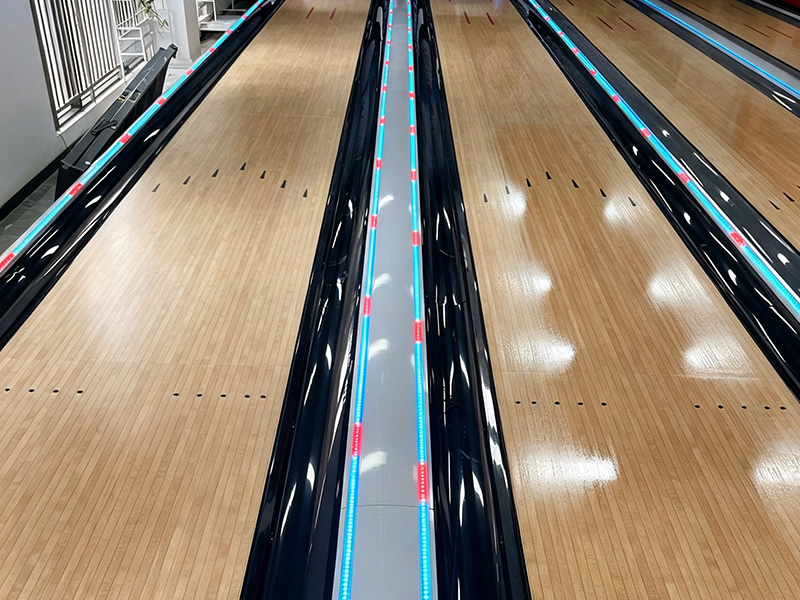
Daily Bowling Lane Maintenance
The most important maintenance tasks should be performed every day, especially in high-traffic bowling centers.
Clean the Lane Surface
After a full day of bowling, the lane surface collects:
l Dust
l Ball track residue
l Old lane oil
l Rubber particles from bowling balls
Before applying fresh conditioner, the previous oil and contaminants should be removed using a professional lane cleaning machine and approved lane cleaner.
A clean surface allows the next oil pattern to perform consistently.
Apply Fresh Lane Oil
After cleaning, fresh lane conditioner should be applied according to the desired oil pattern.
Most commercial bowling centers use a Typical House Shot (THS) for recreational play, while competitive venues may apply Sport Patterns for tournaments.
Regular oiling helps:
l Reduce surface wear
l Control ball motion
l Maintain consistent playing conditions

Weekly Maintenance
Besides daily cleaning, operators should perform a more detailed inspection each week.
Recommended tasks include:
Inspect Lane Panel Surfaces
Look for:
l Scratches
l Surface wear
l Loose joints
l Damaged lane markings
Early repairs prevent more serious damage later.
Check the Pin Deck
The pin deck receives repeated impacts from both bowling pins and bowling balls.
Inspect for:
l Surface damage
l Loose fasteners
l Excessive wear
Clean Ball Return Equipment
Dust and debris can accumulate inside the ball return system.
Routine cleaning helps ensure:
l Smooth ball return
l Lower operating noise
l Reduced mechanical wear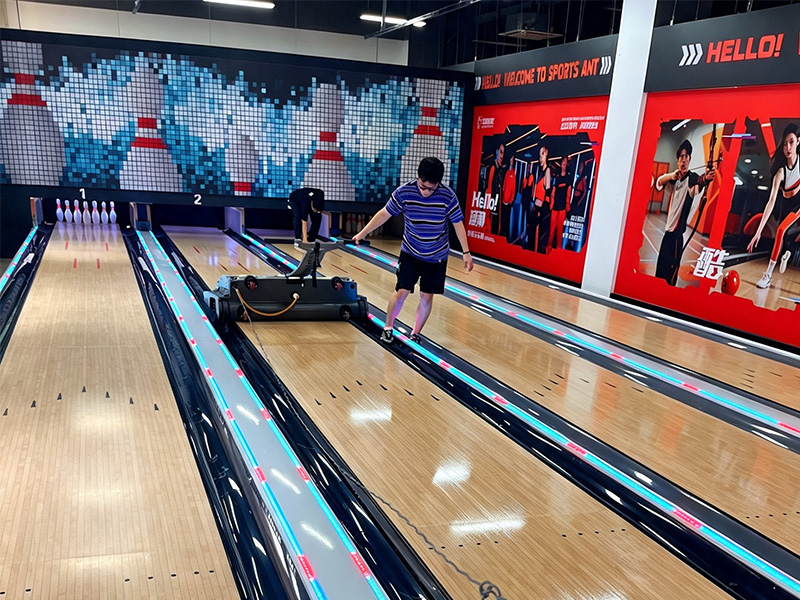
Monthly Maintenance
Monthly inspections should focus on the entire bowling system rather than just the lane surface.
Operators should check:
l Automatic pinsetter performance
l Ball return system
l Scoring system
l Lane lighting
l Gutters
l Approach area
l Protective bumpers (if installed)
Preventive maintenance reduces unexpected downtime and extends equipment life.
Synthetic Bowling Lanes vs. Wooden Bowling Lanes
Maintenance requirements vary depending on the lane material.
|
Synthetic Bowling Lanes |
Traditional Wooden Lanes |
|
Highly wear-resistant |
More susceptible to wear |
|
Easy to clean |
Requires more frequent maintenance |
|
Stable under changing humidity |
Sensitive to moisture and temperature |
|
Lower maintenance costs |
Higher long-term maintenance costs |
|
Long service life |
Requires periodic resurfacing |
Today, most new bowling centers choose synthetic lane panels because they offer greater durability, lower maintenance costs, and more consistent performance.
Common Mistakes That Damage Bowling Lanes
Even high-quality bowling lanes can be damaged by improper maintenance.
Avoid these common mistakes:
Skipping Daily Cleaning
Old oil mixes with dust and creates inconsistent ball reaction.
Using Improper Cleaning Chemicals
Only cleaners specifically designed for bowling lanes should be used.
Delaying Lane Repairs
Small scratches can develop into expensive repairs if ignored.
Ignoring Oil Pattern Consistency
Uneven oil application leads to inconsistent ball motion and poor player experience.
How Often Should Bowling Lanes Be Professionally Serviced?
A complete preventive inspection is recommended at least every 6 to 12 months, depending on the volume of play.
Professional servicing may include:
l Lane leveling inspection
l Pinsetter calibration
l Ball return alignment
l Electrical system inspection
l Software updates
l Safety checks
Routine servicing minimizes unexpected failures and helps maintain reliable operation.
Tips to Extend the Life of Your Bowling Lane
A few simple habits can significantly increase the lifespan of your bowling lanes:
l Clean the lane before applying new oil.
l Use high-quality lane conditioner and lane cleaner.
l Follow a consistent oiling schedule.
l Inspect lane panels regularly for damage.
l Service mechanical equipment before problems occur.
l Train staff on proper daily maintenance procedures.
Consistent maintenance is always more cost-effective than major repairs.
Conclusion: A Great Bowling Experience Starts with Proper Lane Maintenance
A clean, well-maintained bowling lane doesn't just look better—it performs better.
Regular cleaning, proper oiling, routine inspections, and preventive maintenance help protect your investment while delivering a smoother and more enjoyable bowling experience for every player.
For bowling center owners, effective lane maintenance means lower operating costs, longer equipment life, and happier customers—making it one of the smartest investments in long-term business success.