
 Build
Build Upgrade
 Distributor
 About Us
 Project
 Blog
Blog Product Brochure
The quality of the foundation directly affects the player's experience - Highest-quality Bowling Lane Panels & Foundations
What You Can't See Under a Bowling Lane Is Just as Important as What You Can
When people think about a bowling lane, they usually focus on the polished lane surface, the automatic pinsetter, or the satisfying sound of a strike.
But beneath every professional bowling lane lies something most players never notice—a carefully engineered lane foundation.
It may not be visible, but it plays a critical role in ensuring every bowling ball rolls smoothly, every lane remains perfectly level, and every game feels consistent year after year.
So why do modern bowling lanes use wooden I-beam foundations? Why isn't the lane simply placed on concrete or supported by steel? And how is this foundation actually built?
Let's take a look beneath the surface.
What Is a Bowling Lane Foundation?
A bowling lane foundation is the structural framework installed underneath the lane panels.
Its job is much more than simply supporting the weight of the lane.
A properly designed foundation must:
l Keep the lane perfectly level
l Distribute the weight of the lane system
l Support thousands of bowling balls every day
l Reduce vibration during play
l Maintain dimensional stability for years
Think of it like the foundation of a house—if the base isn't stable, everything above it is affected.
Why Use Wooden I-Beam Foundations?
One question we hear frequently is:
"Why are bowling lane foundations made from wooden I-beams instead of solid blocks?"
The answer lies in engineering.
The I-shaped structure offers an excellent balance between strength and weight.
Compared with a solid wooden beam of the same size, an I-beam:
l Uses less material
l Supports heavy loads efficiently
l Reduces overall system weight
l Maintains excellent rigidity over long spans
This design has been widely used in architecture, bridges, and industrial structures for decades—and bowling lanes benefit from the same engineering principles.
For commercial bowling centers, it provides the stability needed for precise ball movement while simplifying transportation and installation.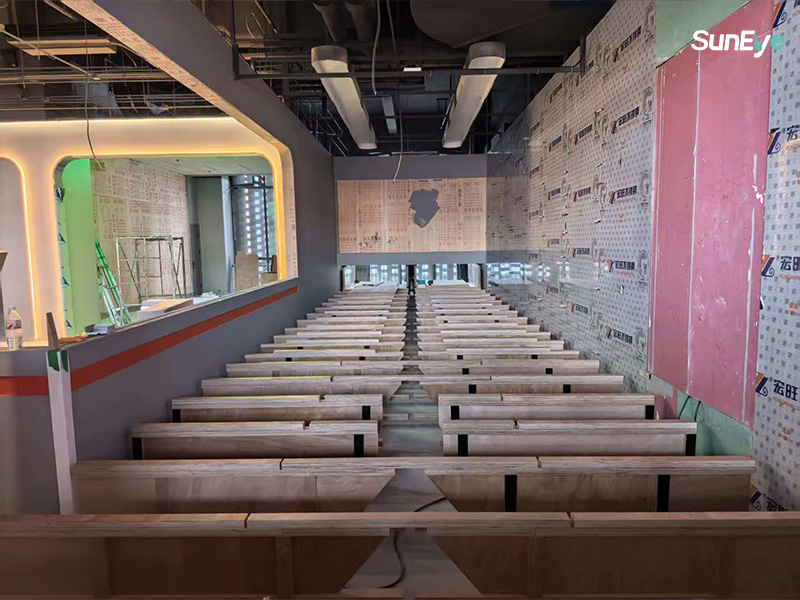
Why Use Solid Wood Instead of Steel or Other Materials?
At first glance, steel might seem like the strongest option.
However, strength isn't the only requirement for a bowling lane foundation.
Excellent Vibration Absorption
Every bowling ball generates impact when it lands on the lane.
Solid wood naturally absorbs vibration, helping reduce noise and creating a smoother playing experience.
Steel, on the other hand, transfers vibration much more easily.
Greater Dimensional Stability
High-quality engineered solid wood maintains excellent structural stability under long-term use.
With proper treatment, it resists deformation while providing consistent support for the lane panels.
Easier Installation
Wooden foundations are easier to cut, adjust, and assemble on site.
This allows installers to level the bowling lane more precisely, even if the building floor is not perfectly flat.
Lower Overall Weight
Compared with large steel structures, engineered wooden I-beams reduce transportation weight without sacrificing strength.
This makes international shipping more economical and installation more efficient.
How Is a Bowling Lane Foundation Built?
Although every manufacturer has its own installation process, most modern bowling lanes follow a similar sequence.
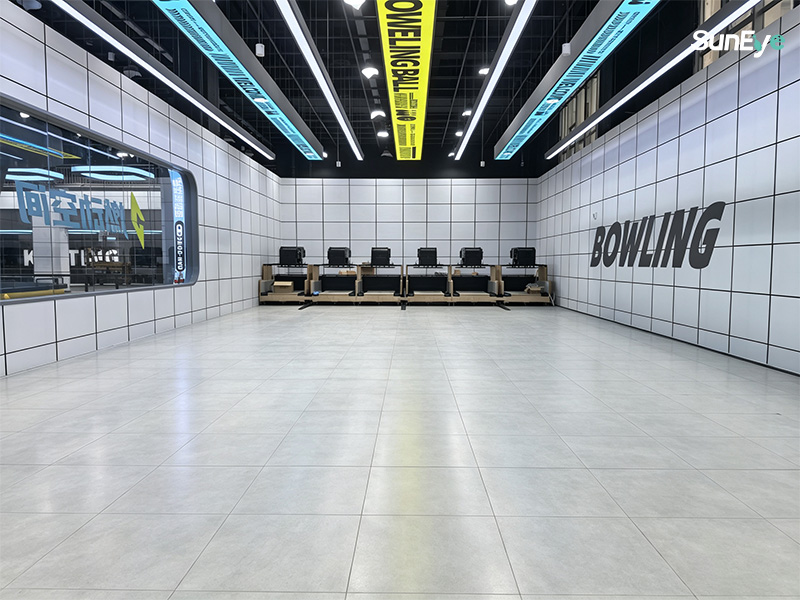
Step 1 — Site Inspection
Before installation begins, technicians measure the floor and verify that the venue meets construction requirements.
Any uneven areas are identified for leveling.
Step 2 — Installing the Wooden I-Beam Framework
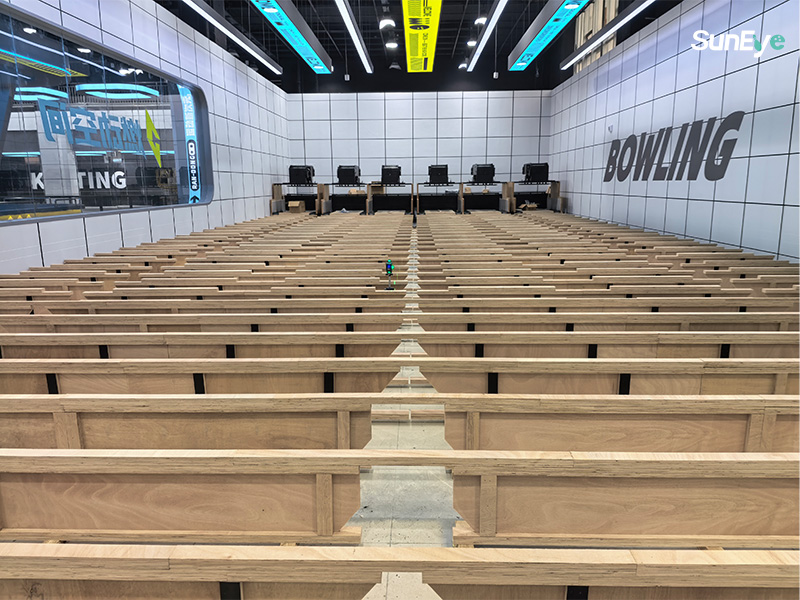
The wooden I-beams are positioned according to the lane layout.
Careful alignment ensures every lane remains perfectly straight and level.
This framework becomes the structural backbone of the entire bowling system.
Step 3 — Installing the Lane Base
Support boards are fixed onto the I-beam framework to create a stable platform for the lane panels.
At this stage, technicians repeatedly check levelness and spacing to ensure precision.
Step 4 — Installing the Synthetic Lane Panels
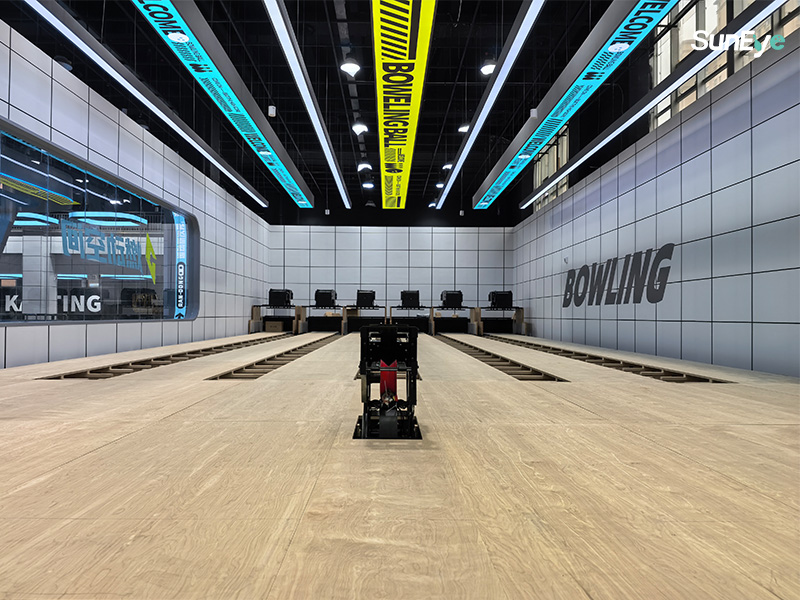
Once the foundation is complete, the synthetic bowling lane panels are installed and accurately aligned.
After this, the remaining equipment—including the ball return system, automatic pinsetter, and scoring system—is assembled.
The result is a complete bowling lane ready for testing and operation.
Does the Spacing Between Bowling Lane Foundations Matter?
The answer is absolutely yes.
The spacing between each wooden I-beam foundation is not determined randomly. It is carefully calculated during the engineering and installation process to ensure the bowling lane performs safely and consistently throughout its service life.
Incorrect spacing can affect the stability of the lane, increase structural stress, and even reduce the lifespan of the entire bowling system.
Why Is Proper Foundation Spacing So Important?
Each bowling lane carries significant static and dynamic loads.
Not only must the foundation support the weight of the lane panels and equipment, but it must also withstand the repeated impact of bowling balls, bowlers walking on the approach, and the operation of the pinsetter and ball return system.
Maintaining the correct spacing helps achieve several important goals.
Uniform Load Distribution
Properly spaced foundations distribute the weight evenly across the entire lane system.
This prevents excessive stress from concentrating in one area, reducing the risk of structural deformation over time.
Preventing Lane Deflection
If the spacing between foundations is too large, the lane panels may experience slight deflection under repeated loading.
Even minor movement can influence ball roll consistency and negatively affect the player's experience.
Correct support spacing keeps the lane surface stable and level.
Improved Installation Accuracy
Consistent spacing creates a precise reference framework for installing lane panels, ball return tracks, and pinsetter equipment.
It also makes lane leveling more accurate during installation.
Long-Term Structural Stability
A well-designed foundation system helps maintain alignment for many years, minimizing maintenance requirements and ensuring reliable performance throughout the life of the bowling center.
What Determines the Foundation Spacing?
There is no universal spacing that fits every bowling project.
Instead, the foundation layout is determined according to several engineering factors, including:
l Bowling lane type (Standard, Mini, or Duckpin)
l Lane dimensions and length
l Equipment configuration
l Foundation load requirements
l Venue floor conditions
l Local installation standards
Professional manufacturers calculate the support layout during the design stage to ensure every component works together as an integrated system.
SunEye's Precision Foundation Design
At SunEye, every bowling lane foundation is designed according to the specific requirements of each project rather than using a one-size-fits-all approach.
Our engineering team carefully plans the wooden I-beam layout, support spacing, and installation structure to ensure optimal load distribution, precise leveling, and long-term stability.
Combined with our synthetic lane panels and turnkey installation services, this engineered foundation system helps deliver consistent ball performance, easier maintenance, and reliable operation for modern bowling centers worldwide.
Does the Foundation Affect Bowling Performance?
Absolutely.
Even the highest-quality bowling lane panels cannot perform properly if the foundation underneath is unstable.
A well-built foundation helps provide:
l Smooth and predictable ball roll
l Consistent lane conditions
l Reduced vibration
l Longer equipment lifespan
l Lower maintenance costs
In other words, the quality of the foundation directly affects the player's experience—even though they never actually see it.
Why Foundation Quality Matters When Choosing a Bowling Equipment Supplier
When comparing bowling equipment suppliers, it's easy to focus on visible components like lane panels or scoring systems.
However, experienced investors know that the hidden structure beneath the lane is equally important.
A well-designed foundation contributes to:
l Faster installation
l Better long-term stability
l Reduced maintenance
l Improved lane accuracy
l Greater return on investment
For commercial bowling projects expected to operate for many years, investing in a reliable foundation is just as important as selecting quality bowling equipment.
The Hidden Hero Beneath Every Bowling Lane
Players may never see the foundation beneath a bowling lane—but they experience its quality with every roll.
From vibration control and structural stability to installation accuracy and long-term durability, the wooden I-beam foundation is one of the most important components of a professional bowling system.
At SunEye, our bowling lane foundations are engineered using high-quality solid wood I-beam structures designed for strength, precision, and reliable long-term performance. Combined with our synthetic lane panels and turnkey installation services, they provide the stable foundation modern bowling centers need to deliver an exceptional bowling experience.